
Fairhaven Bushfire Planning – BHLA
Project snapshot
Service
Bushfire Management
Client
Lachlan Sheppard Architects
Location
Fairhaven, VIC
Council
Surf Coast Shire Council
Consultants
Kinscope
Tomkinson
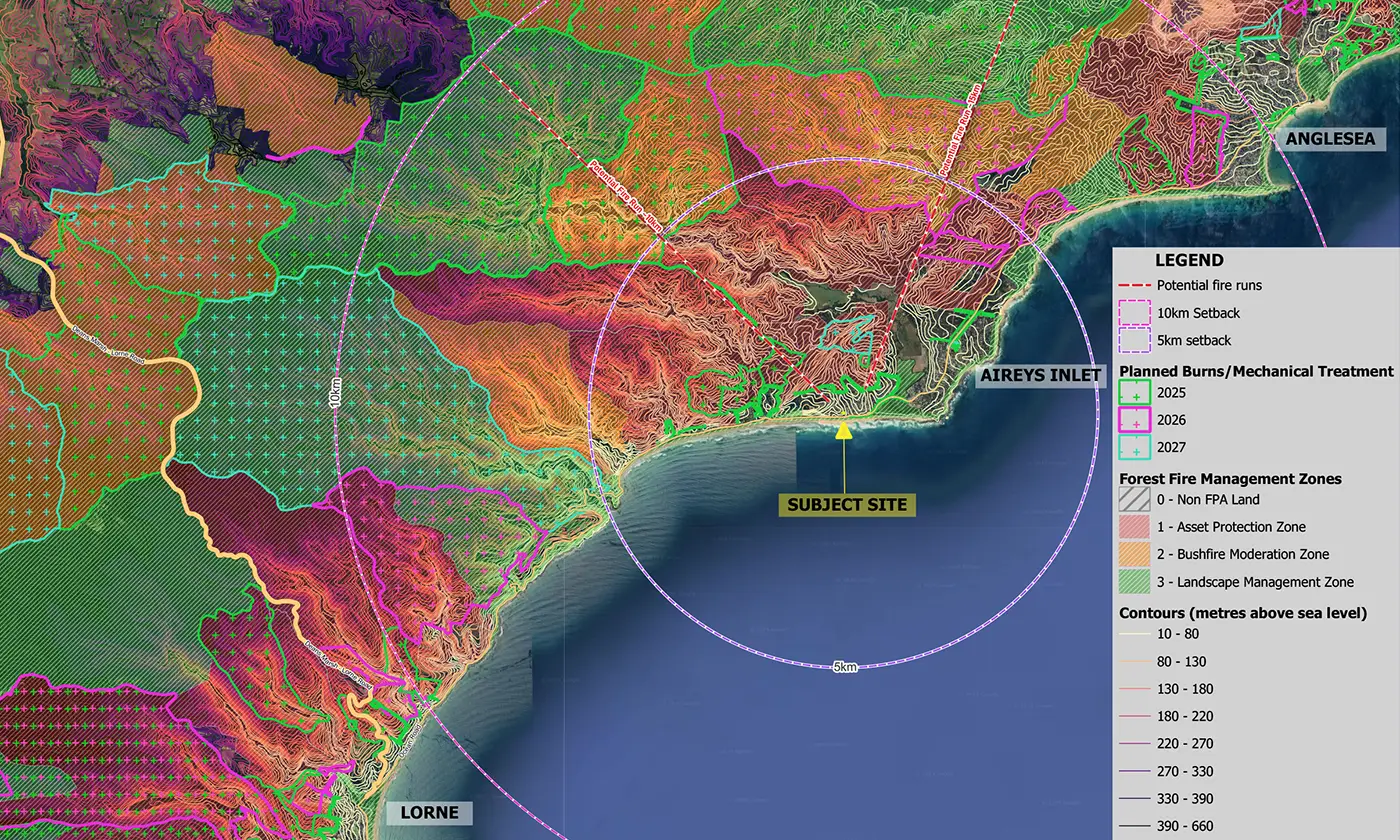
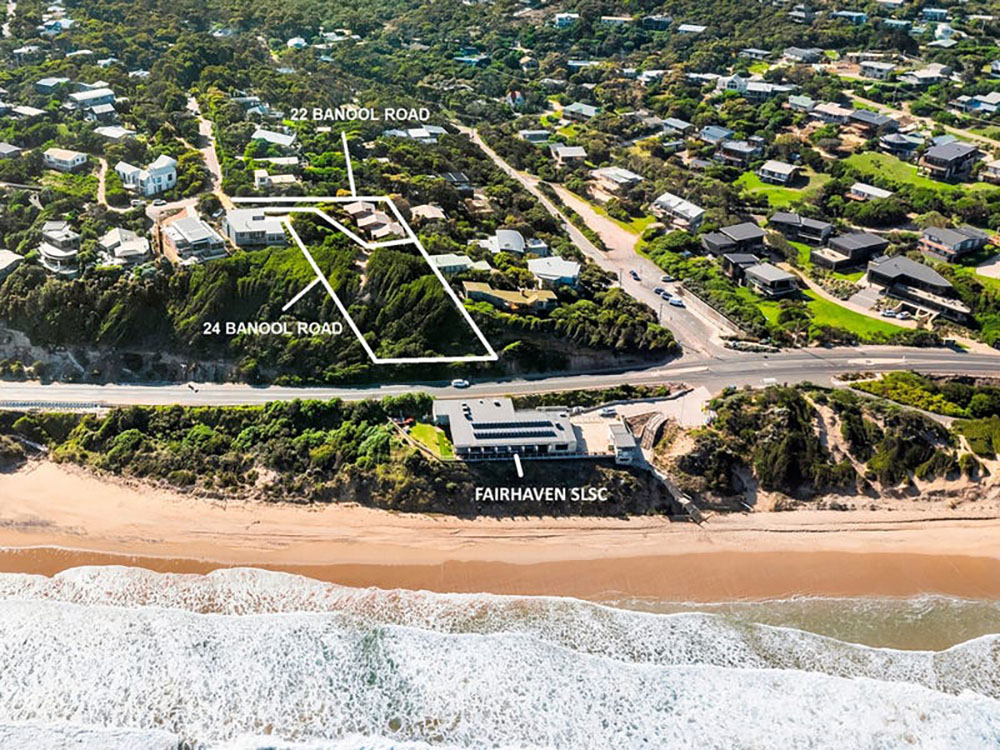
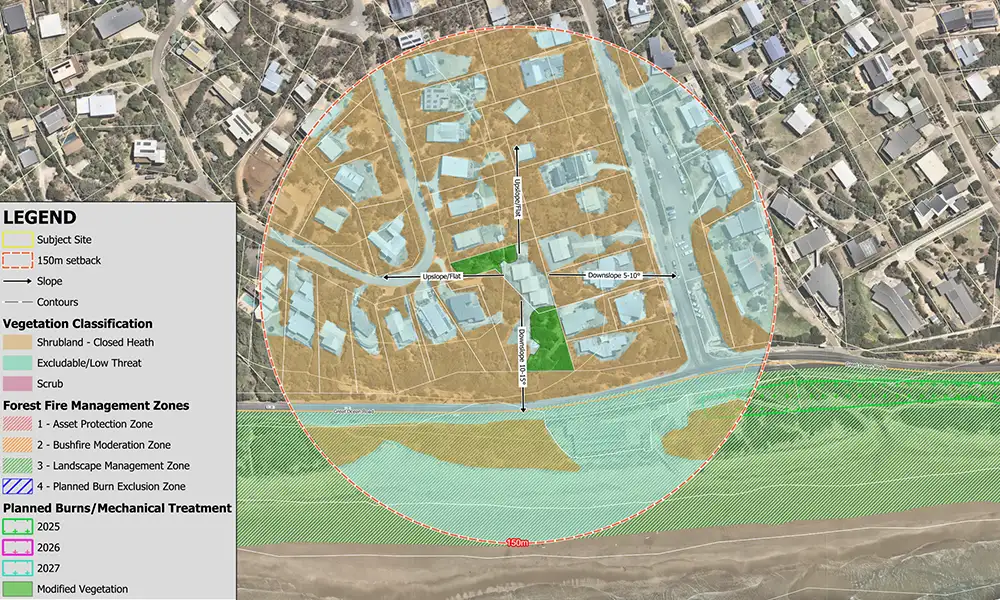
We were engaged by Lachlan Sheppard Architects to prepare the bushfire planning work needed to support a planning permit application. While the design intent was clear, progress depended on demonstrating that bushfire risk could be appropriately managed.
Working Through the Complexity
Our role was to prepare the full suite of bushfire documentation required for approval. This included the Bushfire Management Plan, Bushfire Hazard Landscape Assessment, Bushfire Hazard Site Assessment, and Bushfire Management Statement.
The process involved detailed assessment of the site and surrounding landscape, alongside ongoing consultation with CFA and Council. As feedback came through, we refined the strategy to ensure it aligned with policy and responded to stakeholder expectations.
This was an iterative process. Each round of discussion helped shape a more resolved outcome, balancing technical requirements with a practical response for the site. Careful attention was given to how the development could sit within its context while addressing bushfire risk in a clear and defensible way.
A Clear and Defensible Approach
Bushfire planning was central to the viability of the project. Without CFA support, a planning permit would not be possible.
From the outset, the approach needed to be evidence-based and well aligned with the assessment framework. That meant ensuring every aspect of the documentation could withstand scrutiny, while still supporting a workable development outcome.
Through considered revisions and ongoing dialogue, we were able to demonstrate that the risk could be managed effectively. The final strategy provided a balanced response that addressed safety, compliance, and design intent.
The Outcome
The project secured a planning permit, with CFA providing conditional consent to the bushfire strategy.
This was a key step in enabling the site to move forward. Our work resolved one of the major planning constraints and gave confidence to both the project team and approval authorities. It highlights the value of clear, collaborative bushfire planning in unlocking development potential, particularly in high-risk coastal environments.