

The Victorian Government has introduced the Planning Amendment (Better Decisions Made Faster) Bill 2025, representing one of the most comprehensive reforms to the state’s planning framework in decades.
The Bill proposes significant updates to the Planning and Environment Act 1987 (P&E Act) with the aim of creating a more efficient, transparent and responsive planning system that can better support housing delivery and streamlined decision-making.
Streamlined Planning Permit Pathways
Central to the Bill is the introduction of three distinct permit pathways designed to align assessment effort with project complexity and potential impact:
Type 1:
- Applies to small-scale, low-impact development that is consistent with the applicable zones and overlays.
- Introduces a new streamlined pathway, replacing the current VicSmart process.
- Does not require public notification or referrals.
- Provides for deemed approval where a decision is not made by the responsible authority within 10 business days.
Type 2:
- Applies to developments that generally comply with the relevant codes but include minor variations that remain acceptable under state and local planning policy.
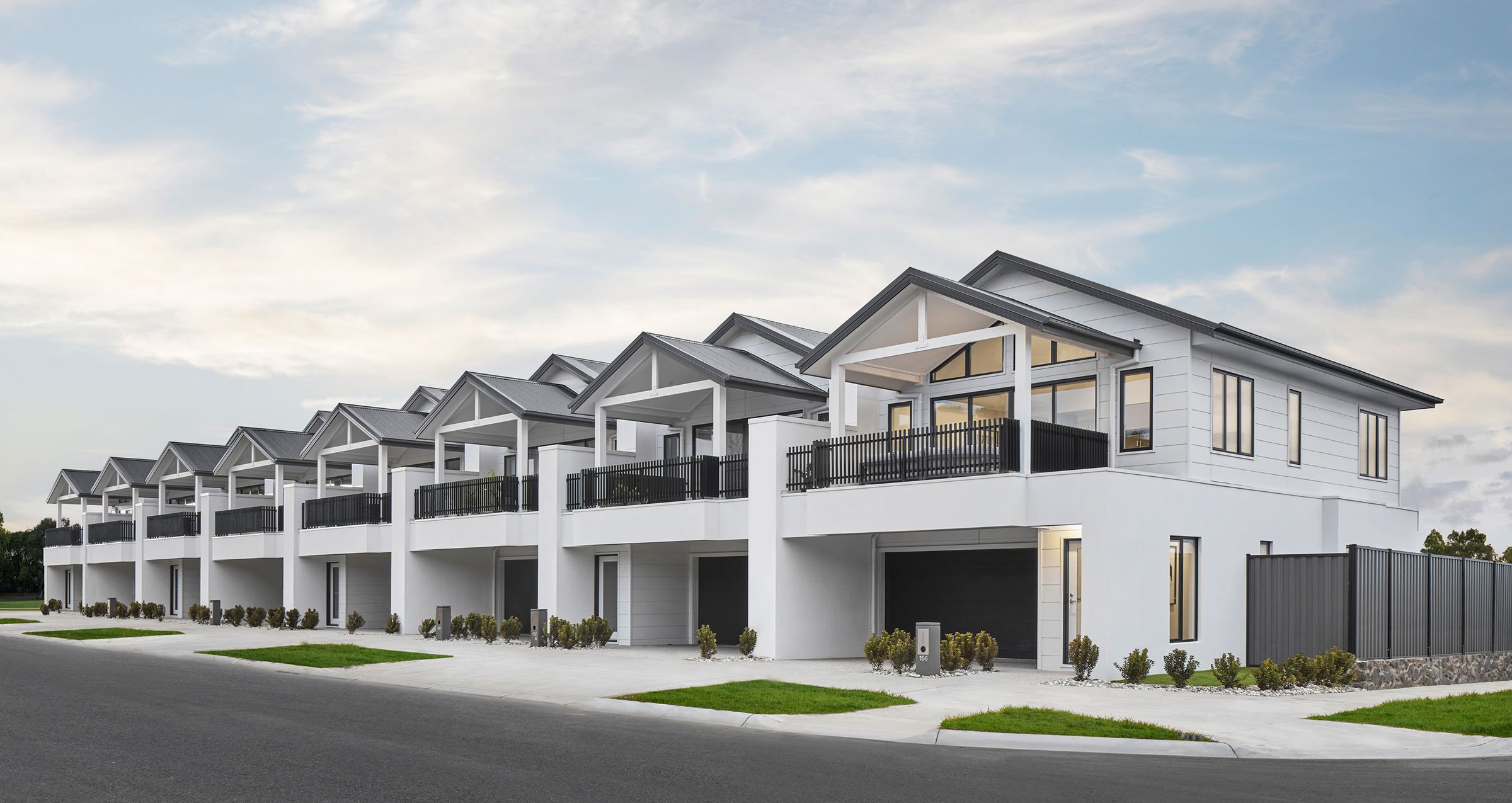
- Includes proposals such as townhouses, lower-density housing and residential buildings that meet most code requirements.
- Public notice and referrals are only required for specified Type 2 permit applications.
- No third-party appeal rights for an application which may require public notice.
- Provides a 30-business day assessment period, after which an application for failure to determine may be lodged with VCAT — reducing the current timeframe by half.
Type 3:
- Applies to large, complex or higher-risk developments with a greater potential for off-site or amenity impacts, such as high-rise apartment buildings.
- Requires public notice and referral to relevant authorities.
- Provides a 60-day assessment period before an application for failure to determine may be lodged, consistent with the current planning permit process.
The proposed changes have been designed to ensure planning permit decisions will be made faster, with statutory timeframes tailored to the nature of the development.
Reforming Third-Party Review and Public Participation
The Bill significantly reshapes third-party appeal rights to the Victorian Civil and Administrative Tribunal (VCAT). Review rights will be restricted to those directly notified under a Type 3 permit application, with no external appeal rights for Type 1 and 2 permits.
This change is intended to limit delays from widespread third-party appeals and focus review opportunities on directly affected parties. Persons receiving notice of a Type 2 application may comment on the proposal but cannot lodge a formal objection that would trigger VCAT appeal rights.
Modernising Restrictive Covenant and Compensation Frameworks
The Bill significantly reshapes third-party appeal rights to the Victorian Civil and Administrative Tribunal (VCAT). Review rights will be restricted to those directly notified under a Type 3 permit application, with no external appeal rights for Type 1 and 2 permits.
This change is intended to limit delays from widespread third-party appeals and focus review opportunities on directly affected parties. Persons receiving notice of a Type 2 application may comment on the proposal but cannot lodge a formal objection that would trigger VCAT appeal rights.
Strengthened Compliance, Enforcement and Transparency
A significant focus of the Bill is enhancing compliance and enforcement under the P&E Act. This includes new offences (such as false or misleading information), substantial penalty increases, and enhanced enforcement powers for authorised officers and courts. These measures are designed to deter unlawful development practices and strengthen regulatory certainty.
New enforcement powers will allow Courts to issue a broader range of orders following breaches, including:
- Adverse publicity orders, requiring offenders to publicly disclose offences
- Commercial benefit orders, requiring repayment of financial gains derived from breaches
- Supervisory intervention orders, mandating compliance improvements and monitoring
- Industry exclusion orders, restricting persistent or serious offenders from participating in land development activities
Strengthened Compliance, Enforcement and Transparency
A significant focus of the Bill is enhancing compliance and enforcement under the P&E Act. This includes new offences (such as false or misleading information), substantial penalty increases, and enhanced enforcement powers for authorised officers and courts. These measures are designed to deter unlawful development practices and strengthen regulatory certainty.
New enforcement powers will allow Courts to issue a broader range of orders following breaches, including:
- Adverse publicity orders, requiring offenders to publicly disclose offences
- Commercial benefit orders, requiring repayment of financial gains derived from breaches
- Supervisory intervention orders, mandating compliance improvements and monitoring
- Industry exclusion orders, restricting persistent or serious offenders from participating in land development activities
Planning Scheme Amendment Changes
The Bill introduces a three-tier framework for planning scheme amendments, designed to better align consultation and assessment requirements with the scale and potential impact of proposed changes. Detailed eligibility criteria for each tier will be set out in future regulations, which have not yet been released.
Low-Impact Amendments
Low-impact amendments will be subject to targeted consultation only, generally limited to directly affected landowners and occupiers, relevant authorities, and applicable Traditional Owner or native title groups.
These amendments may be initiated by councils without Ministerial approval. While the Minister retains discretion to refer a low-impact amendment to a planning panel, consideration and approval can occur without a public panel hearing.
Medium-Impact Amendments
Medium-impact amendments will require public notice and exhibition, allowing submissions to be made by any interested party.
These amendments may be referred to a planning panel at the Minister’s discretion; however, approval decisions can be made without a public hearing, based on written material. This represents a streamlined alternative to the current panel process for amendments of moderate complexity.
High-Impact Amendments
High-impact amendments will be subject to the highest level of public participation and review.
They will require public notice and exhibition and must be referred to an independent planning panel. Submissions may be made by any person. Where no submissions seek changes or raise objections, panel consideration may occur on the papers, unless a hearing is requested by the planning authority.
Procedural Reforms Supporting the New Framework
In addition to the tiered amendment pathways, the Bill introduces a number of procedural changes intended to improve efficiency, transparency and accountability, including:
- Proponent-initiated amendments, enabling landowners, developers and public authorities to request councils to prepare planning scheme amendments.
Further guidance on how amendments will be classified as low, medium or high impact will be provided through regulations once released.
Strategic Vision and Broader Objectives
Aligned with Victoria’s Housing Statement and Plan for Victoria, the Bill seeks to position planning as a key driver of long-term growth, housing supply and economic development. It updates the objectives of the P&E Act to include explicit references to climate response, Traditional Owner rights, and the provision of social and affordable housing.
Looking Ahead
The Bill has already passed the Legislative Assembly and is under consideration in the Legislative Council, with debate and scrutiny likely to continue as stakeholders assess the practical implications of the reforms. Its passage will mark a pivotal shift in Victorian planning law, aiming to balance efficiency, accountability and strategic growth across the state’s evolving planning landscape.